 Turtle Back Zoo
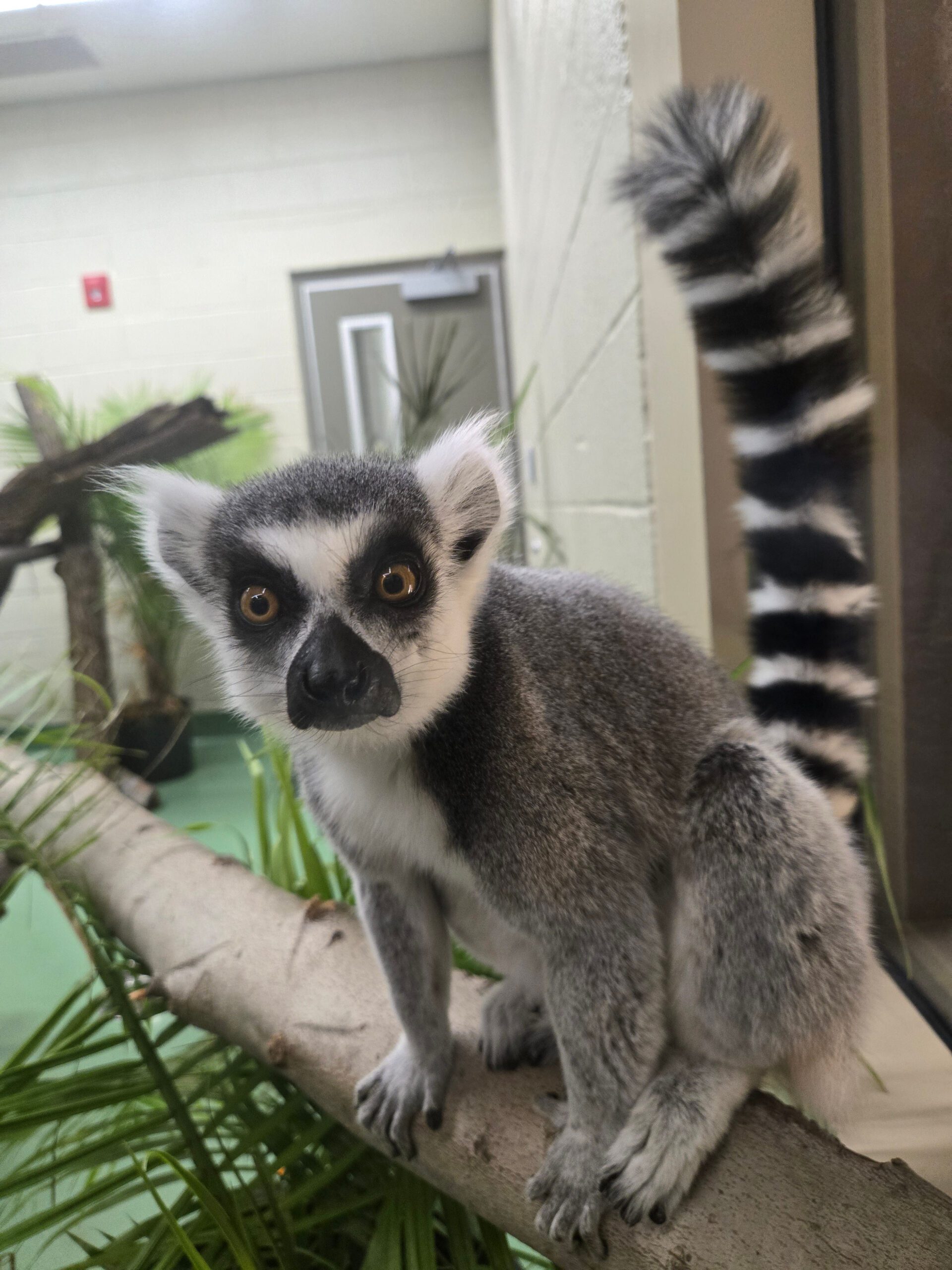
Ring Tailed Lemurs
Ring-tailed lemurs (Lemur catta) are a species of lemur found in the forests of southwestern Madagascar. They are known for the 13 black and white bands on their tail. Unlike most lemurs who are completely arboreal and live in the trees, ring-tailed lemurs are also terrestrial, spending 40% of their time walking on the ground. They are omnivores, with a diet consisting of leaves, fruit, flowers, and insects. They live in groups called troops, which consist of 3 to 25 individuals. When the troops travel on the ground they walk on all fours and keep their tails raised, so that group members can see each other. Ring-tailed lemurs are critically endangered due to habitat fragmentation from human development.
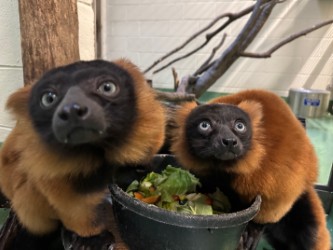
Red Ruff Lemurs
Red ruff lemurs (Varecia rubra) live in the tropical forests of eastern Madagascar. They have thick, chestnut color fur that allows them to stay warm and dry in the wet, sometimes chilly rainforest canopy. Each red ruff lemur weighs approximately nine pounds, making them one of the largest living species of lemur. They are also known as the world’s largest pollinator, as they feed on pollen and transport it to other plants as they move through the forest, though their main source of food is fruit. Red ruff lemurs are very vocal, with 12 different calls; they can even understand calls from black and white lemurs (Varecia variegata), and scientists have heard them “talking” to each other. They are considered critically endangered, as the hardwood trees in which they live and from which they get their food are often cut down for illegal logging.
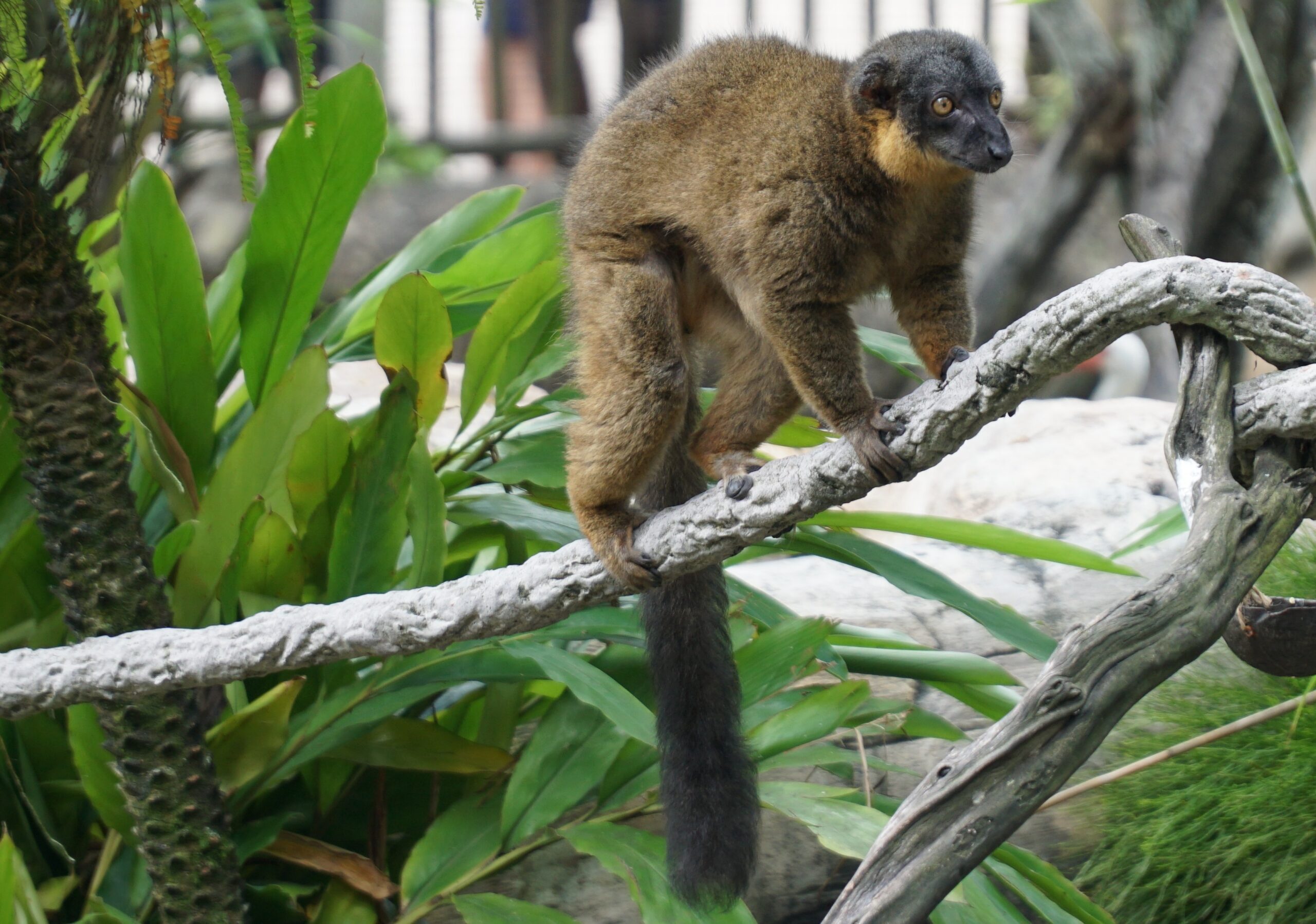
Collared Brown Lemur
Collared brown Lemurs (Eulemur collaris) are a medium sized lemur found in southeastern Madagascar. Unlike most lemur species they are sexually dimorphic, meaning that the males and females look different from one another. Both sexes have brown coats, orange eyes, and a ring of reddish-brown fur around their necks. The males also have more gray in their coat, darker tails, and a dark stripe along their backs. Red ruffs are arboreal, using the trees to move around the forest. They inhabit tropical, moist, lowland forests, and live at an elevation of approximately 6,000 feet. Fruit makes up 70% of their diet, and they also eat flowers, nectar, bark, soil, insects, and small chameleons. They are cathemeral, meaning that they are active both at night and during the day. They spend two thirds of the day resting, and they are awake and looking for food late at night and during the early morning. Unlike most lemur species, collared brown lemur troops have no social hierarchy. This species has become endangered due to deforestation. and it has become common for troops to have only 2 or 3 lemurs due to this habitat loss.
Conservation
In 2013, IUCN’s Species Survival Commission (SSC) released a 185-page strategy to conserve Madagascar’s lemurs. This report outlined a series of actions that needed to be taken in order to conserve lemurs and their habitat, which includes working with and training local communities, growing primate-centric ecotourism, maintaining and creating long-term research projects, and establishing and preserving a captive population of endangered lemurs. Here at Essex County Turtle Back Zoo and the Zoological Society of New Jersey, we support lemur conservation efforts through working directly with organizations doing conservation work in the wild, including organizations within Madagascar. Additionally, our resident Turtle Back Zoo lemurs are part of the Special Survival Plan (SSP) breeding program, so that we can maintain a healthy breeding population in captivity.
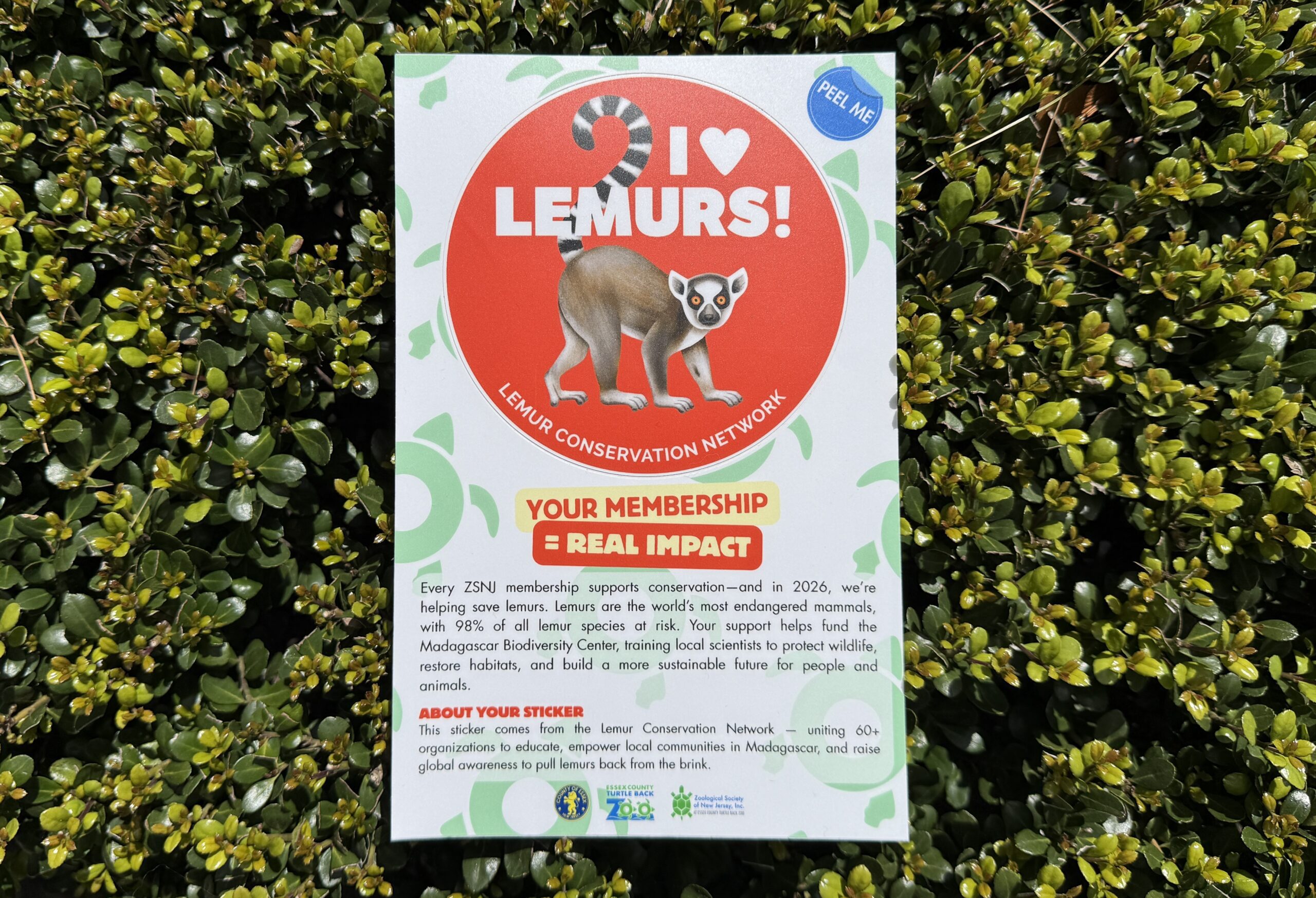
Member Gift
Because of the crises facing lemurs, the Zoological Society of New Jersey wants to help with their conservation! For every membership sold, a portion of the proceeds will be donated to the Madagascar Biodiversity Center, an organization which is leading lemur conservation in Southern Madagascar by focusing on lemur research and on increasing lemur populations in the area. Additionally, each Society member will receive a gift that aids in lemur conservation – a lemur sticker from the Lemur Conservation Network! We purchased the stickers from the Lemur Conservation Network in order to support their work in Madagascar, where they help protect lemurs and their environment.